
Top 5 AI Writing Tools to Improve Your Essays
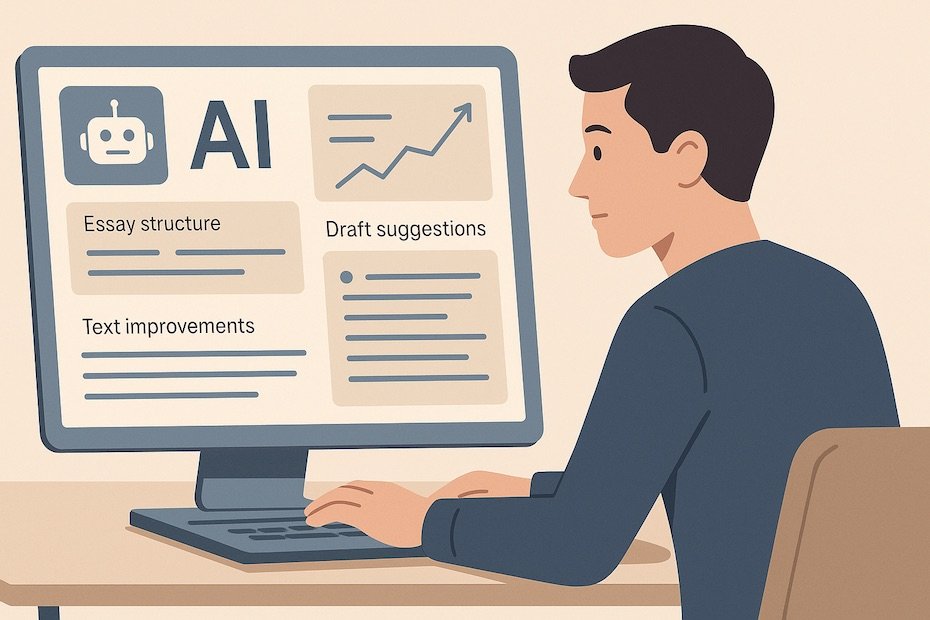
Table of Contents
- What makes an AI writing tool effective for essays?
- 1. ChatGPT: Versatile Drafting and Editing
- 2. Jasper.ai: Structured Long-Form Writing
- 3. Copy.ai: Idea Generation and Transitions
- 4. Rytr: Accessible and Simple Assistance
- 5. Wordtune: Polishing and Refinement
- How do you choose the right AI tool for essays?
- Practical tips for using AI tools effectively
- What are the risks of AI essay writing?
- Best AI writing tools for essays
- In Conclusion
You can improve your essays quickly and effectively by using AI writing tools that enhance clarity, structure, grammar, and flow. These platforms support your writing without replacing your academic voice.
In this article, you’ll learn about the five best AI writing tools for essays, how they work, their strengths, and where to use caution. I’ll walk you through their real applications so you can make smart, practical choices.
What makes an AI writing tool effective for essays?
An effective AI essay tool helps you maintain academic structure, ensures clarity, and adapts tone to formal requirements. It should improve readability without diluting originality.
Strong platforms balance automation with control, allowing you to generate drafts but also refine and edit output. They give you flexibility without locking you into rigid text.
Most importantly, they help you stay accurate and coherent. While no AI replaces your research, the right tool ensures your ideas come across with precision.
1. ChatGPT: Versatile Drafting and Editing
ChatGPT is a leading tool for drafting essays. It helps you create outlines, expand ideas, and polish sentences while adapting to your instructions.
You can use it to build essays step by step. Start with an outline, generate body paragraphs, and refine tone to match academic expectations. Its strength lies in adaptability—you can push it to clarify arguments, reformat text, or compare versions.
The caveat is factual accuracy. Always verify claims before including them in a graded essay. ChatGPT works best when paired with credible sources and careful editing.
2. Jasper.ai: Structured Long-Form Writing
Jasper.ai is known for structured, long-form content. While it started as a marketing tool, it can support academic writing with tone controls and document memory.
Its advantage is maintaining consistency across sections. If you need a clear introduction and a cohesive conclusion that align with your thesis, Jasper can keep the essay connected.
That said, Jasper occasionally generates surface-level content in highly technical subjects. Use it for structure and consistency, but always back up data with verified research.
3. Copy.ai: Idea Generation and Transitions
Copy.ai shines in creativity. It generates multiple phrasing options, thesis statements, or topic sentences when you’re stuck.
It helps break writer’s block—whether you need a sharper introduction or smoother transitions. By producing alternatives, it lets you choose language that feels natural.
The downside is depth. For essays requiring rigorous logic or evidence, Copy.ai is best used for support, not as the backbone of your argument.
4. Rytr: Accessible and Simple Assistance
Rytr is a cost-friendly tool with a straightforward interface. It generates short paragraphs, improves grammar, and adjusts tone quickly.
For students who need an entry-level AI tool, Rytr offers an efficient way to refine drafts or rephrase difficult sections. It’s lightweight and user-friendly.
However, it lacks the sophistication of heavier platforms. Rytr is best for polishing and filling gaps, not building complex essays from scratch.
5. Wordtune: Polishing and Refinement
Wordtune specializes in rephrasing and improving clarity. It doesn’t generate full essays but elevates your draft by suggesting smoother, more precise sentences.
When you already have content written, Wordtune helps you refine it. This makes it perfect for final editing stages, where sentence flow and readability matter most.
It won’t add citations or evidence, but it ensures your essay feels polished and professional.
How do you choose the right AI tool for essays?
The right AI tool depends on your stage in the writing process. If you’re starting from scratch, ChatGPT or Jasper give you structure. If you’re polishing, Wordtune is unmatched.
You should also consider cost, reliability, and academic integrity. Free or affordable options like Rytr are helpful, while paid tools like Jasper justify the investment for longer projects.
Many students mix tools—using ChatGPT for drafting, Copy.ai for thesis options, and Wordtune for refinement. That layered approach gives balance without over-reliance on a single platform.
Practical tips for using AI tools effectively
When used correctly, AI tools amplify your skills. Here are practical practices you should adopt:
- Start with an outline before generating text
- Use multiple drafts and merge the best parts
- Verify facts with credible academic sources
- Edit AI output to align with your voice
- Run originality checks before submission
These practices keep you in control of the essay while maximizing AI efficiency.
What are the risks of AI essay writing?
AI tools sometimes fabricate information or produce generic text. This undermines academic credibility if you don’t fact-check.
There’s also a risk of plagiarism. AI output may resemble existing text, so originality checks and paraphrasing are essential.
Finally, relying too heavily on AI weakens your writing skills. Treat it as a collaborator, not a replacement.
Best AI writing tools for essays
- ChatGPT for drafting
- Jasper.ai for structured writing
- Copy.ai for transitions
- Rytr for quick assistance
- Wordtune for refinement
In Conclusion
AI writing tools can sharpen your essays by helping you draft faster, write clearer, and polish with precision. They’re powerful when used as assistants, not replacements. By combining these platforms with your own thinking, you’ll consistently produce stronger essays.
Want to explore practical ways to integrate AI into your academic writing process? my linkedin for deeper strategies and tailored advice.
Related Posts

Top In-Demand Skills College Students Should Learn in 2026
Discover the top in-demand skills college students should learn in 2026...

The Best Exam Preparation Techniques for Busy Students
Discover the best exam preparation techniques for busy students, including active...

Is Supply Chain a Stressful Career? The Reality No One Tells You
Is supply chain a stressful career? Learn which roles are high-pressure,...