
The Role of AI in Creating Personalized Learning Paths
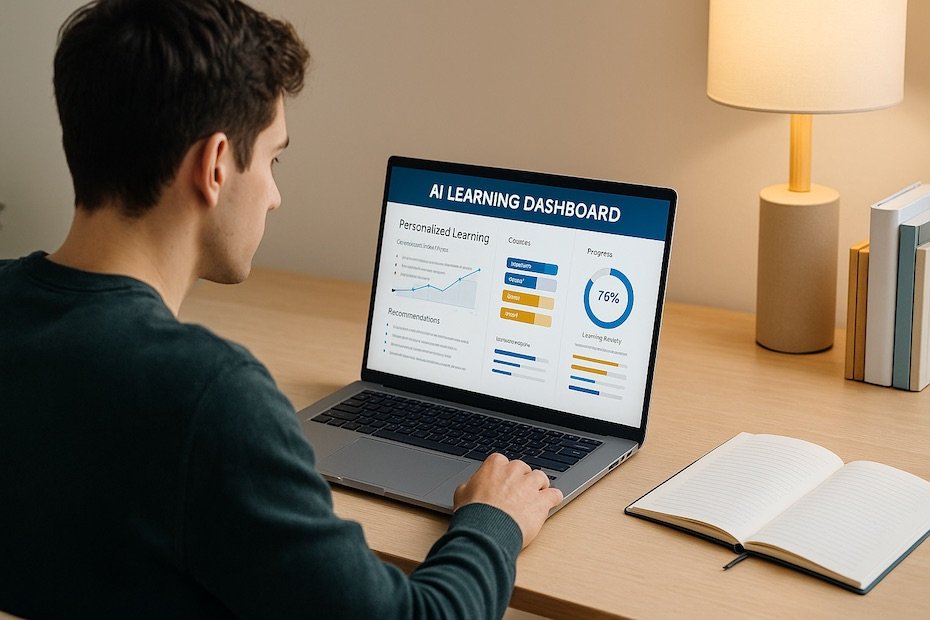
Table of Contents
- What Is a Personalized Learning Path in Education?
- How Does AI Build Personalized Learning Paths?
- What Problems Does AI Solve in Traditional Learning Models?
- How Does AI Improve Student Engagement and Academic Performance?
- What Tools and Systems Support AI-Driven Personalization?
- What Are the Benefits of Using AI for Personalized Learning Paths?
- How Can You Implement AI-Powered Personalized Learning in Your Institution?
- Key Advantages of AI Personalization
- Empower Learners Through AI-Driven Personalization
AI creates personalized learning paths by analyzing student performance, predicting gaps, and adjusting instruction to match individual strengths and learning speed. With AI guiding each step, you deliver a tailored academic experience that improves mastery and long-term retention.
You benefit from AI because it replaces guesswork with precision. Learners receive targeted materials, teachers get actionable data, and institutions gain clarity on where students struggle or excel. This article shows you how AI-driven personalization strengthens engagement, accelerates progress, and reshapes modern education using current global statistics and real-world adoption patterns.
What Is a Personalized Learning Path in Education?
A personalized learning path is an adaptive instructional plan that aligns content, pacing, and assessment with each student’s needs, skills, and goals. You use AI to analyze performance, identify strengths, and adjust instruction automatically based on real-time data. This creates a flexible journey where every learner receives exactly what they need to progress.
AI-powered personalization has become essential as student profiles grow increasingly diverse. With global data showing that 86% of students now use multiple AI tools for learning, you’re operating in a world where traditional one-size-fits-all instruction is no longer sufficient. Students expect tailored learning support that adjusts along with their understanding.
You deploy personalized paths to ensure no learner is left behind. Whether you manage a university course, a skills-based program, or a digital learning platform, AI gives you immediate access to performance signals. These insights help you match students with exercises, resources, and content formats that accelerate improvement and maintain engagement.
How Does AI Build Personalized Learning Paths?
AI builds personalized learning paths through continuous data analysis. It reviews performance patterns, identifies gaps, and updates learning recommendations instantly. You benefit from an automated cycle that monitors behavior, tracks mastery, and adjusts complexity based on each student’s progress.
The technology uses machine learning models to interpret signals such as response accuracy, time spent on tasks, common errors, and preferred content types. These systems operate at speeds no human instructor can match. They also reduce manual evaluation time, allowing teachers to focus more on human connection and less on administrative tasks.
Modern AI tools apply reinforcement learning to make decisions that lead to more effective outcomes over time. The more data the system receives, the sharper its recommendations become. This contributes to the projected US$ 208.2 billion personalized learning AI market by 2034, showing how institutions worldwide are scaling this approach.
What Problems Does AI Solve in Traditional Learning Models?
Traditional learning models struggle when student skill levels vary widely. You deal with classrooms where some students advance quickly while others fall behind. AI corrects these pacing issues by presenting content that matches each learner’s current level.
Another common problem is limited instructor time. Teachers cannot give personalized feedback to every student at scale, especially in large courses. AI handles repetitive evaluation tasks—like grading short responses or identifying common errors—giving instructors time for high-value interaction. In one report, 68% of teachers said AI-supported grading reduced stress, freeing them to focus on coaching.
Traditional assessments also produce delayed feedback. AI creates immediate opportunities for improvement by analyzing errors in real time. Students receive guidance when the learning moment is most relevant, not days later. This immediacy strengthens mastery and helps students build confidence through continuous progress.
How Does AI Improve Student Engagement and Academic Performance?
AI improves engagement by presenting content in the format students respond to most. Some prefer visual explanations, others respond to short quizzes, and many benefit from step-by-step tutoring. When you match the format to the learner, engagement increases rapidly. Studies show 72% of students feel more engaged when using AI tutors that provide real-time feedback.
Performance improves because AI identifies gaps earlier than traditional instruction. It spots small errors before they become larger issues and recommends targeted practice. This targeted correction helps learners understand material deeply rather than memorize it superficially. Over time, mastery improves and academic confidence strengthens.
AI also boosts long-term retention by adapting pacing. If a student demonstrates mastery, the system advances them quickly. If they struggle, the system reintroduces foundational concepts before moving forward. This prevents knowledge gaps and builds a reliable progression path that remains adaptive at every stage.
What Tools and Systems Support AI-Driven Personalization?
AI-driven personalized learning relies on platforms that integrate data analytics, adaptive assessments, and interactive content. You use tools like virtual tutors, automated grading systems, and recommendation engines to streamline learning. These platforms adjust difficulty, recommend new lessons, and monitor progress without manual input.
Learning Management Systems (LMS) now embed AI capabilities that track performance and create individual pathways within courses. Many LMS platforms use competency-based progression models where students advance only after demonstrating mastery. This structure creates a more reliable and measurable learning process.
Institutions also deploy AI dashboards that summarize class-wide performance trends. These dashboards highlight who is progressing, who is struggling, and which skills require additional reinforcement. With 57% of higher education institutions prioritizing AI, these systems help you make informed decisions at both individual and institutional levels.
What Are the Benefits of Using AI for Personalized Learning Paths?
AI-driven personalized learning paths strengthen instruction by removing unnecessary friction. You improve efficiency, accuracy, and clarity in your learning programs. Students receive targeted materials, which reduces time spent reviewing content that isn’t relevant to their development.
Institutions gain cost savings through automation. Reports show that 60% of schools using AI for administrative tasks reduce operational load, giving teachers more time for meaningful instruction. With AI absorbing repetitive tasks, educators can focus on mentorship, evaluation, and interaction.
The method also enhances accessibility. AI tools support learners who face language barriers or processing challenges by providing instant adjustments to content. These features ensure that every learner receives support aligned with their capabilities, creating a more inclusive environment.
How Can You Implement AI-Powered Personalized Learning in Your Institution?
You implement AI-powered personalization by identifying where automation offers the most improvement—assessment, tutoring, content routing, or feedback. Starting with one clear use case allows you to measure early performance gains before scaling further.
Your next step involves selecting platforms that align with your instructional goals. The strongest tools offer adaptive lessons, performance dashboards, and integration with your existing LMS. Implementation becomes smoother when your systems connect seamlessly.
You sustain progress by training teachers and administrators to work with AI-driven insights. When educators understand how to interpret learning patterns, they make stronger decisions about pacing, intervention, and student support. Over time, AI becomes an essential partner in delivering high-quality instruction.
Key Advantages of AI Personalization
- Tailored learning
- Real-time feedback
- Faster skill mastery
- Adaptive pacing
- Targeted resource recommendations
- Improved engagement
- Continuous performance monitoring
Empower Learners Through AI-Driven Personalization
AI allows you to deliver learning experiences that match each student’s speed, preference, and goals while reducing instructional inefficiencies. When you pair AI with skilled teaching, you create an environment where learners progress confidently and consistently. Stronger engagement, better performance, and more efficient instruction emerge naturally. Your next step is to evaluate where AI enhances your current system and build personalized pathways that transform learning outcomes across your institution.
Related Posts

Top In-Demand Skills College Students Should Learn in 2026
Discover the top in-demand skills college students should learn in 2026...

The Best Exam Preparation Techniques for Busy Students
Discover the best exam preparation techniques for busy students, including active...

Is Supply Chain a Stressful Career? The Reality No One Tells You
Is supply chain a stressful career? Learn which roles are high-pressure,...