
Supply Chain vs. Logistics: Which Dominates the Industry?
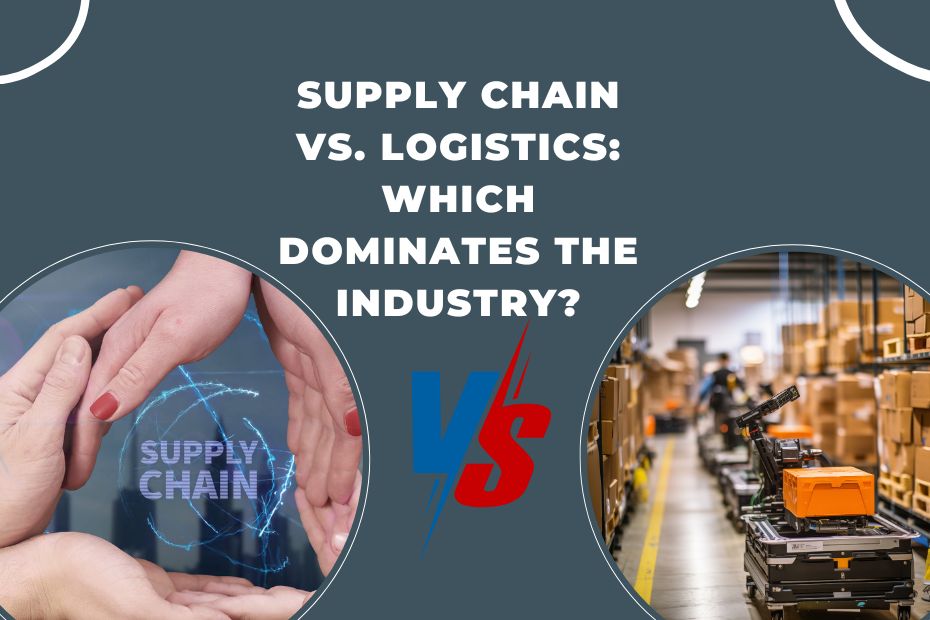
Table of Contents
- Understanding Supply Chain Management
- The Role of Logistics
- Key Differences Between Supply Chain and Logistics
- Supply Chain: A Strategic Powerhouse
- Logistics: The Backbone of Execution
- Which Dominates the Industry?
- The Role of Technology in Supply Chain and Logistics
- Quick Comparison: Supply Chain vs. Logistics
- In Conclusion
In the world of product movement and delivery, “supply chain” and “logistics” are two terms that often come up, and they’re frequently used interchangeably. However, they represent distinct parts of how goods flow from their origin to their destination. As someone deeply entrenched in the industry, I’ve seen how businesses often struggle to understand the roles of these two elements and how they interconnect. Let’s break it down and explore which has a greater impact on the industry today.
Understanding Supply Chain Management
Supply Chain Management (SCM) is the broad process of overseeing the flow of goods, information, and finances from the sourcing of raw materials to the delivery of the final product to the customer. It’s a system that connects all parts of production, ensuring efficiency and value at every step.
SCM covers multiple stages, including product development, sourcing, production, inventory management, distribution, and customer service. Each of these components relies on seamless coordination to meet customer demand efficiently. When supply chain management is effective, it reduces costs, improves delivery timelines, and enhances overall customer satisfaction.
The Role of Logistics
Logistics, on the other hand, is a subset of supply chain management. It focuses specifically on the transportation, storage, and distribution of goods. Essentially, logistics ensures that products are moved and stored efficiently at every stage of the supply chain.
Logistics activities include tasks like warehouse management, inventory control, order fulfillment, and transportation. It answers the “how” of getting goods from one place to another. For instance, ensuring that raw materials reach the production facility on time or that finished products are delivered to retailers is the responsibility of logistics.
While SCM has a strategic, high-level focus, logistics operates on a more tactical level, dealing with the day-to-day operations that keep the supply chain running.
Key Differences Between Supply Chain and Logistics
One of the questions I’m frequently asked is, “What’s the difference between supply chain and logistics?” While the two are closely related, their focus and scope differ significantly.
- ScopeSupply chain management encompasses the entire process from raw material sourcing to product delivery. Logistics, however, deals with the specific tasks of transportation and storage within the supply chain.
- FocusSCM is about optimizing the overall flow of goods, information, and finances to maximize efficiency and value. Logistics, in contrast, focuses on the execution of moving goods, ensuring they’re in the right place at the right time.
- IntegrationSCM requires collaboration across multiple stakeholders, including suppliers, manufacturers, distributors, and retailers. Logistics mainly coordinates internal processes like warehousing, transportation, and inventory management.
These distinctions highlight why supply chain management is often considered a more comprehensive discipline, but logistics remains a critical component.
Supply Chain: A Strategic Powerhouse
Supply chain management has evolved into a critical strategic function for businesses. Companies now understand that optimizing the entire chain can provide a competitive advantage. By aligning all elements of the supply chain, businesses can reduce lead times, lower costs, and improve customer satisfaction.
For instance, a well-integrated supply chain can use demand forecasting tools to anticipate customer needs and adjust production schedules accordingly. It can also leverage real-time data to monitor inventory levels and prevent stockouts or overstocking. These strategic advantages are why supply chain management is often viewed as a broader, more influential discipline in the industry.
Logistics: The Backbone of Execution
While supply chain management sets the strategy, logistics brings that strategy to life. It’s the execution arm that ensures goods are transported, stored, and delivered as planned. Without effective logistics, even the best supply chain strategies can fail.
Consider the role of transportation within logistics. Whether it’s trucking, shipping, or air freight, transportation ensures that products move through the supply chain efficiently. Warehousing is another critical logistics function, providing storage solutions that keep goods organized and accessible. Logistics also manages last-mile delivery, ensuring products reach the customer promptly and in good condition.
These operational functions make logistics indispensable to the success of the supply chain.
Which Dominates the Industry?
The question of whether supply chain management or logistics dominates the industry is complex. The truth is, one cannot function effectively without the other. Supply chain management provides the strategic framework, while logistics ensures the tactical execution of that strategy.
However, the increasing complexity of global trade has shifted the focus toward supply chain management. Businesses now realize that optimizing the entire chain—from sourcing to delivery—leads to greater efficiency, cost savings, and customer satisfaction. At the same time, advancements in technology have enhanced logistics operations, making them faster and more reliable.
The integration of supply chain management and logistics is where true industry dominance lies. Companies that can seamlessly combine strategy and execution are the ones that thrive in today’s competitive landscape.
The Role of Technology in Supply Chain and Logistics
Technology has transformed both supply chain management and logistics. Tools like artificial intelligence (AI), machine learning, and blockchain are helping businesses optimize their operations.
In supply chain management, AI-powered demand forecasting tools allow companies to predict customer needs accurately. Blockchain enhances transparency and traceability across the supply chain, helping businesses ensure ethical sourcing and compliance. On the logistics side, tools like route optimization software and autonomous vehicles are revolutionizing transportation and delivery.
The rise of technology has blurred the lines between supply chain management and logistics, making them more interconnected than ever.
Quick Comparison: Supply Chain vs. Logistics
- Supply Chain: Focuses on the entire flow of goods, information, and finances.
- Logistics: Concentrates on transportation, storage, and distribution.
- SCM Scope: Encompasses all stages, from raw materials to final delivery.
- Logistics Scope: Manages tasks within the supply chain for efficient execution.
- Integration: SCM requires coordination across multiple stakeholders; logistics operates within those plans.
In Conclusion
Supply chain management and logistics are two sides of the same coin. While supply chain management provides the strategic vision for moving goods efficiently, logistics ensures that vision becomes a reality through effective execution. Neither can dominate the industry alone—they must work hand in hand.
In today’s fast-paced, tech-driven world, the companies that succeed are those that integrate both disciplines seamlessly. By understanding the differences and leveraging the strengths of each, businesses can build supply chains that are efficient and resilient and adaptable to future challenges.
Related Posts

Top In-Demand Skills College Students Should Learn in 2026
Discover the top in-demand skills college students should learn in 2026...

The Best Exam Preparation Techniques for Busy Students
Discover the best exam preparation techniques for busy students, including active...
Is Supply Chain a Stressful Career? The Reality No One Tells You
Is supply chain a stressful career? Learn which roles are high-pressure,...