
Day in the Life of a Supply Chain Manager: What to Expect
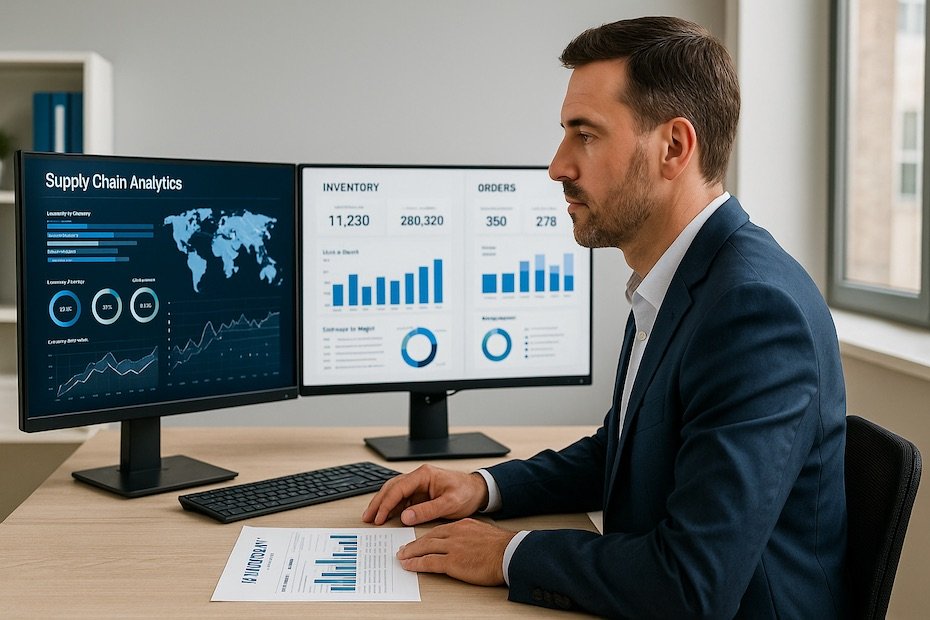
Table of Contents
- What time does a supply chain manager’s day usually begin?
- How do you handle sudden disruptions or delays?
- What meetings occupy most of your schedule?
- How do you manage inventory and demand planning?
- What about supplier and vendor interactions?
- How do logistics and warehousing factor into your day?
- What software tools do you rely on during the day?
- Key daily responsibilities as a supply chain manager
- How do you wrap up the day as a supply chain manager?
- What does a supply chain manager do daily?
- In Conclusion
A supply chain manager’s day revolves around monitoring inventory, coordinating logistics, managing supplier relationships, analyzing data, and resolving disruptions to keep operations running smoothly.
If you’re stepping into supply chain management, you need clarity on the real work you’ll face daily. This article outlines your typical responsibilities, tools you’ll use, challenges you’ll handle, and how you add value across procurement, production, and logistics. Expect a detailed breakdown of what happens from morning review to end-of-day wrap-up.
What time does a supply chain manager’s day usually begin?
Your day usually starts early because supply chain activity spans multiple time zones. Before meetings kick in, you review overnight reports and dashboards. These show shipment statuses, supplier updates, raw material levels, and production alerts.
You need to identify problems that occurred outside normal business hours. For instance, if a shipment is delayed due to port congestion, you escalate before the disruption impacts production. By tackling red flags in the morning, you set a proactive tone for the rest of the day.
Most managers begin by logging into their ERP or supply chain control tower software. From there, you prioritize tasks and flag what needs immediate action versus what can be delegated. This level of preparation ensures you’re not constantly firefighting.
How do you handle sudden disruptions or delays?
Disruptions are a certainty. Whether it’s a supplier missing a delivery window, a truck breakdown, or a surge in customer demand, your role is to keep operations flowing.
When issues arise, you dive into visibility tools or contact suppliers and carriers directly. If a container is stuck in customs, you might arrange for alternative sourcing or expedited freight. If a production line risks stopping due to a part shortage, you reallocate available stock.
Your ability to problem-solve quickly matters. The faster you trace the root cause, the sooner you can activate contingency plans. With strong processes, you minimize downtime and protect customer satisfaction.
What meetings occupy most of your schedule?
Your calendar fills with cross-functional and external meetings. Expect daily syncs with procurement, operations, and logistics teams to align on order status and upcoming needs.
Sales & Operations Planning (S&OP) sessions are central to your role. These meetings integrate sales forecasts with supply capabilities, helping avoid costly imbalances. You also brief leadership teams on KPI performance like fill rate, on-time delivery, and inventory turnover.
Outside your company, you spend time on calls with suppliers, freight providers, and third-party logistics partners. Building trust through consistent communication ensures suppliers know your expectations and carriers remain accountable for delivery timelines.
How do you manage inventory and demand planning?
Balancing inventory is one of your most critical tasks. Too much stock ties up capital and risks obsolescence, while too little leads to stockouts and missed sales.
You rely on demand forecasts and historical consumption patterns to guide decisions. Advanced planning systems integrate point-of-sale data, seasonality trends, and market shifts into predictive models. From there, you adjust safety stock levels and reorder points.
A key part of this process is scenario modeling. You simulate “what if” cases, such as a supplier delay or an unexpected demand spike, and prepare responses. This level of planning prevents costly surprises.
What about supplier and vendor interactions?
Supplier relationship management is a daily responsibility. You meet with suppliers to review delivery schedules, pricing agreements, and compliance standards.
If a supplier consistently misses deadlines, you push for corrective action. You may also run performance scorecards, comparing them against KPIs like lead time reliability and defect rates. On the positive side, strategic suppliers become partners for cost reduction and innovation.
Negotiation plays a role as well. You work to secure favorable payment terms or volume discounts while ensuring long-term stability. Your ability to balance cost with quality keeps the supply chain competitive and resilient.
How do logistics and warehousing factor into your day?
Logistics and warehousing are execution-heavy, and you spend significant time ensuring both operate efficiently. You monitor real-time shipment updates, validate carrier performance, and approve routing adjustments.
On the warehouse side, you review daily picking, packing, and dispatch reports. If order backlogs appear, you allocate labor or authorize overtime to meet customer commitments. You also keep an eye on space utilization, making adjustments for seasonal spikes or large inbound shipments.
Your decisions in this area directly impact customer satisfaction. Every late delivery or mis-shipped item is visible to the customer, making logistics oversight one of the most visible measures of your performance.
What software tools do you rely on during the day?
Your toolkit includes ERP systems like SAP or Oracle, demand planning tools, transportation management systems (TMS), warehouse management systems (WMS), and advanced analytics dashboards.
These systems consolidate data across the supply chain, allowing you to measure KPIs, run predictive analytics, and execute transactions. For example, a TMS can optimize freight costs by suggesting the most efficient carrier route, while a WMS ensures accuracy in picking and packing.
When systems fall short, spreadsheets remain your backup. While not ideal, they let you model ad hoc scenarios or perform detailed root cause analysis without waiting for system integrations.
Key daily responsibilities as a supply chain manager
- Reviewing dashboards for inventory, demand, and logistics performance
- Managing disruptions like supplier delays, transport breakdowns, or quality issues
- Leading S&OP and cross-functional meetings to align demand and supply
- Adjusting forecasts and inventory levels using real-time data
- Negotiating with suppliers and monitoring their performance
- Coordinating warehousing operations for accurate order fulfillment
- Using ERP, WMS, and TMS tools for visibility and optimization
How do you wrap up the day as a supply chain manager?
Before closing your laptop, you review outstanding action items, update leadership on unresolved issues, and prepare the next day’s agenda.
You send summaries of critical disruptions and the corrective measures in place. You also review KPI dashboards once more to check whether immediate action is needed before the day ends.
Many supply chain managers use the final hour to plan for tomorrow—checking inbound shipments, supplier commitments, and staff scheduling. By finishing strong, you create a smoother start for the next morning.
What does a supply chain manager do daily?
- Reviews supply chain dashboards and KPIs
- Resolves disruptions in sourcing and logistics
- Leads meetings to align procurement and operations
- Manages supplier relationships and monitors inventory
In Conclusion
Your daily life as a supply chain manager is built on vigilance, coordination, and problem-solving. From early-morning system checks to end-of-day planning, you stay focused on efficiency, cost, and customer satisfaction. Each decision you make keeps supply and demand balanced, proving why your role remains central to organizational success.
Learn more about supply chain management insights and strategies on my Medium profile.
Related Posts

Top In-Demand Skills College Students Should Learn in 2026
Discover the top in-demand skills college students should learn in 2026...

The Best Exam Preparation Techniques for Busy Students
Discover the best exam preparation techniques for busy students, including active...

Is Supply Chain a Stressful Career? The Reality No One Tells You
Is supply chain a stressful career? Learn which roles are high-pressure,...